
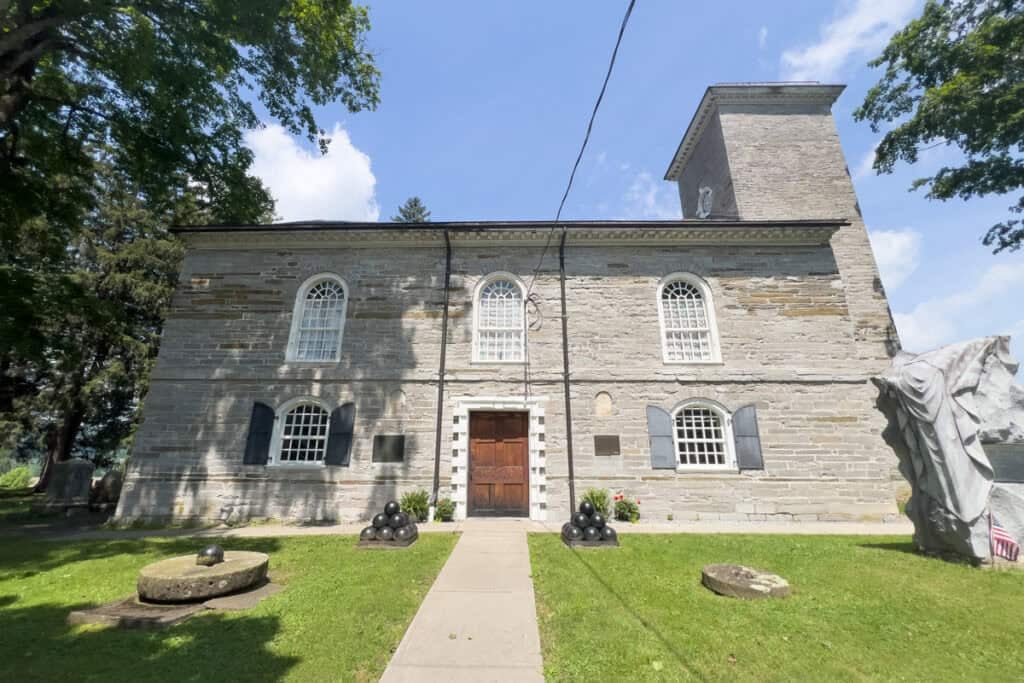
Located on the outskirts of Schoharie, New York is one of the most historic buildings in Central New York, the Old Stone Fort.
This structure was built as a Dutch Reformed Church in 1772. In 1777, the church was surrounded by a log stockade and used as a fort to protect Americans in the area.
In October 1780, the fort was attacked by approximately 800 Loyalists and Native Americans. It withstood the attack, but a hole from a cannonball can still be seen in the church’s wall.
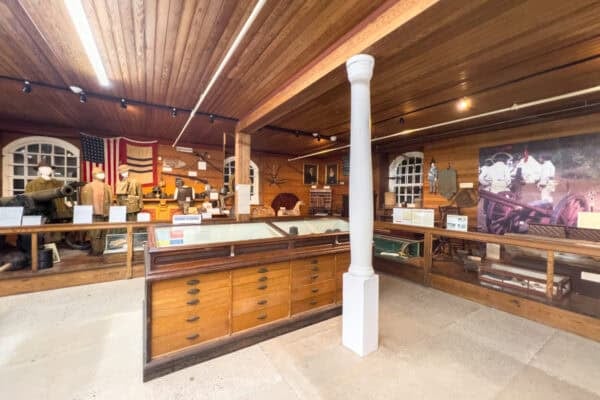
After the war, it once again served as a church until 1844. From 1857 to 1873, it was used as an armory. Finally, it was given to Schoharie County for use as a historical museum, and the Schoharie County Historical Society was formed to operate it in 1888.
Since then, it has been the home of the historical society and showcases items telling the story of the county and is now known as the Old Stone Fort Museum.
Wanting to learn about this long and storied history, I visited the museum on a beautiful summer day.
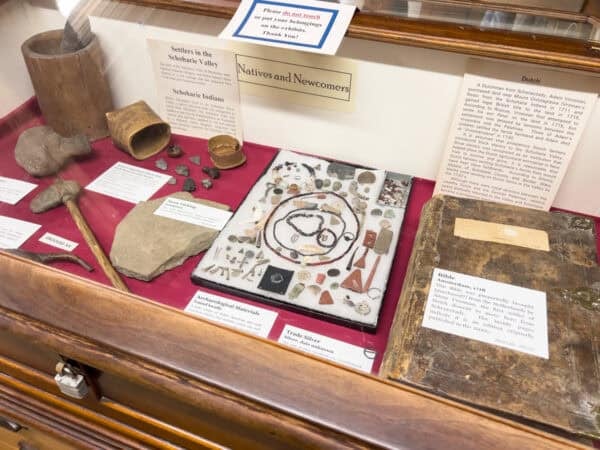
Inside the Old Stone Fort, there are two levels of displays, so there is a lot to see here.
The first floor offers information about the history of the the county, as well as a lot of both American and German items from World War 2. I especially found the paperwork from a slave trade in the area to be quite interesting as it’s not something I recall seeing at any other historical society that I’ve visited.
You can also see the cannonball that struck the church when the British attacked the fort in 1777.
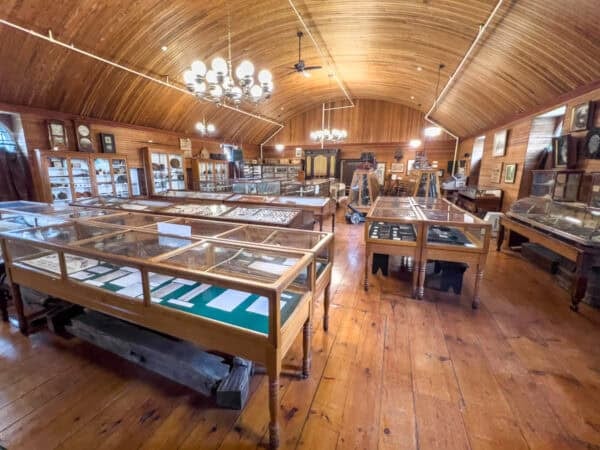
Upstairs, the displays are designed as a Cabinet of Curiosities, a popular museum setup when it was created in the 1890s.
In these cabinets, you’ll find hundreds, if not thousands of items from around the world. Honestly, you could spend hours up here and still come back and see something you missed the first time through.
Highlights in this space that I found included weapons, fossils, and beads from the Philippines. There were also execution pamphlets, arrowheads, small taxidermied animals, and a piece of the hull from the Civil War ship “Old Ironsides”.
I also saw some of the Gilboa fossils, which are Devonian-era tree fossils found in the Schoharie County community of the same name.
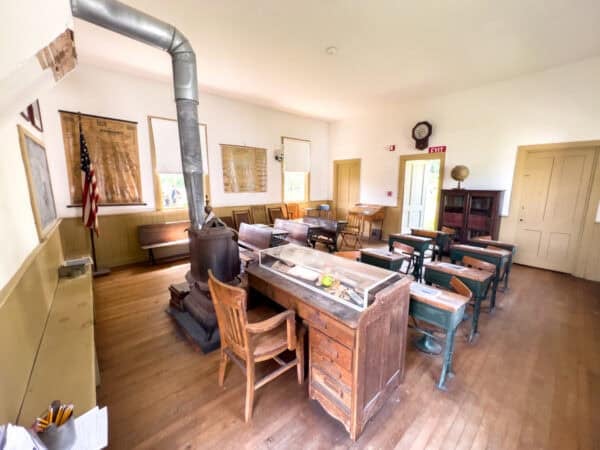
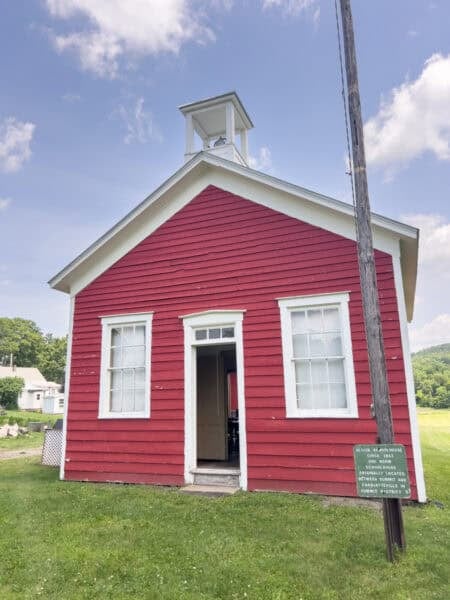
Once you’ve finished exploring the displays within the Old Stone Fort, there’s still more to see as the museum has seven historic buildings located across the street next to the cemetery. Not all of these are open to the public, but several are and contain additional displays that are worth seeing.
These buildings date from the 18th and 19th centuries and were moved here to preserve them for future generations to enjoy.
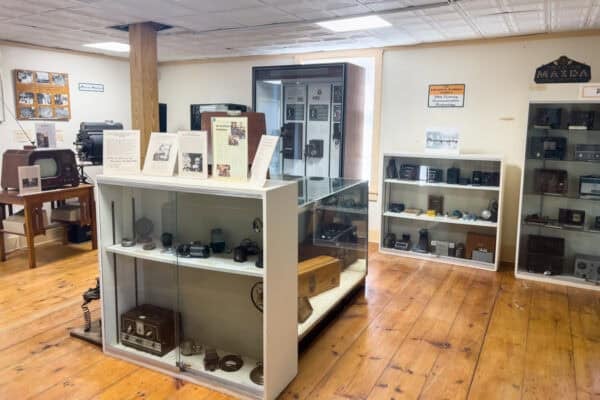
One of my favorites was the 1830s Warner House, which featured one-man’s collection of 20th-century electronics. I found it really fun to walk through the space and note some of the items that I remember having at home during my youth, as well as some of the interesting items that pre-dated me.
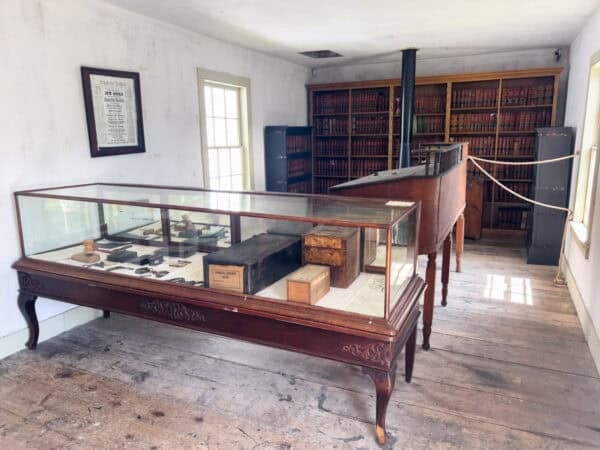
Another interesting space was the Jackson Law Office, also from the 1830s, which featured a recreation of what a lawyer’s office would have looked like in the mid-19th century. There is also a very cool old voting machine on display since this building was also used as a polling place.
It’s also worth noting that the Old Stone Fort Museum is only a quarter-mile from Fox Covered Bridge. One of two covered bridges in Schoharie County, it was built in 1982 and is an interesting site to visit while in the area.
Overall, I quite enjoyed my time at the Old Stone Fort Museum, and I really liked learning about the history of this part of New York, especially related to the Revolutionary War.
This is definitely a sport worth checking out when you’re in the area.
It’s also worth noting that while I highly recommend visiting during the museum’s operation hours, if you can’t, there are historical signs outside that offer you some good information on the Stone Fort, the cemetery, and the other buildings on-site.
Looking for more things to do in the area? Check out Secret Caverns, Mine Kill Falls, and the Huyck Preserve.